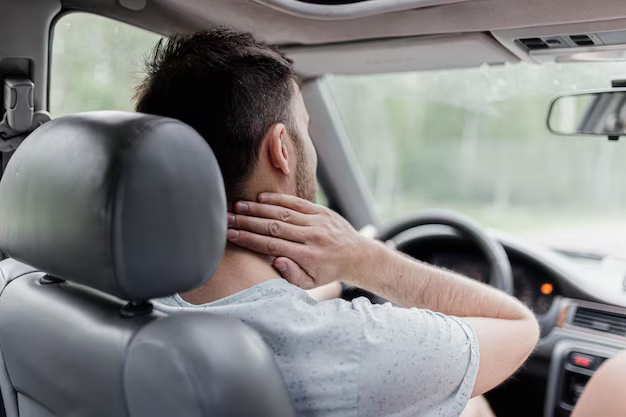

Getting back behind the wheel after a concussion can be challenging. Driving requires fast reflexes, sharp focus, visual tracking, coordination, and split-second decision-making. Even subtle brain changes after a head injury can make driving dangerous for you and others. At Keystone Medical Group, we guide patients from Kansas City, Overland Park, Lee’s Summit, Shawnee, Blue Springs, Liberty, and surrounding areas to determine when it’s safe to drive again using objective clinical assessments.
A concussion affects much more than memory or balance. Brain injuries can impair:
Reaction time
Attention and concentration
Visual tracking, depth perception, and eye-hand-foot coordination
Judgment and decision-making
Even mild deficits in these areas can cause delayed braking, swerving, missed signs, or slower responses to unexpected traffic changes. Many patients in North Kansas City, Gladstone, Parkville, and The Plaza report feeling “almost normal” until they attempted to drive and realized their brain was not ready.
You should avoid driving if you are experiencing:
Blurred or double vision
Light sensitivity
Headache or nausea triggered by motion
Dizziness when turning your head
Slowed thinking or delayed reaction time
Trouble concentrating or maintaining alertness
Difficulty tolerating busy environments
Driving with any of these symptoms can significantly increase the risk of accidents, even if you feel okay while at rest.
There is no universal timeline for returning to driving after a concussion, but most guidelines suggest waiting until you can:
Tolerate screen time and multitasking without symptoms
Pass vestibular and visual exams, including VOMS testing
React quickly and consistently under stress
Maintain focus for 30 minutes or longer without cognitive fatigue
Clinicians may use reaction time testing, neurocognitive assessments (CNS Vital Signs, DANA), or driving simulators to guide safe return-to-driving decisions.
Once cleared to drive, patients should:
Begin on low-stress routes such as quiet streets
Avoid driving at night or in bad weather initially
Limit trips to 10–15 minutes at first
Avoid multitasking, including phone use or loud music
Stop driving immediately if symptoms return
These strategies help rebuild confidence while minimizing risk.
Anxiety about driving is common, particularly after prolonged symptoms or injuries sustained in car accidents. Keystone Medical Group helps patients regain confidence through:
Vestibular and visual retraining
Cognitive rehabilitation and reaction-time drills
Gradual exposure with structured support
Referral to driving rehab specialists when appropriate
Never guess when it comes to post-concussion driving. Our comprehensive evaluations assess cognitive function, visual tracking, balance, and reaction time, giving patients a clear, safe plan for returning to work, school, sports, and driving in Kansas City.
Learn more about our post-concussion evaluation and rehabilitation services here: Concussion Evaluation